
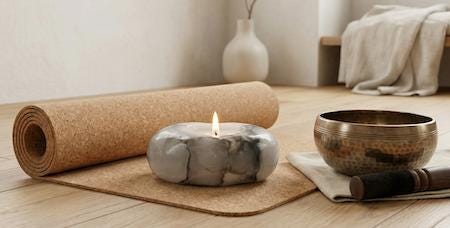
Candle Meditation — How to Create a Mindful Ritual with Stone Candles
Candle meditation (trataka) is a practice where you focus your gaze on a steady flame for 5 to 20 minutes. It improves concentration, reduces mental chatter, and creates a clear transition between daily activity and rest. The practice has roots in yogic tradition but requires no special training, no equipment, and no experience — just a candle, a quiet space, and a few minutes. Stone candles are well suited for this practice because they produce a stable, low flame from a reinforced wick that does not flicker erratically, bend, or sink. The unscented standard line removes fragrance as a distraction. And the stone-like form itself — heavy, grounded, natural — reinforces the calming quality of the practice. This guide explains what candle meditation is, how to do it step by step, why the candle matters, and how to build a daily ritual around it.
What Is Candle Meditation (Trataka)?
Trataka is a Sanskrit word meaning "to gaze steadily." In yogic tradition, it is one of the six purification practices (shatkarmas) — techniques for cleansing the body and mind. The practice involves fixing your gaze on a single point — traditionally a candle flame — without blinking, for an extended period. The purpose is not mystical. It is practical: by giving your eyes and attention a single, unchanging point of focus, you quiet the constant stream of thoughts that normally fills your mind. The flame becomes an anchor. When your mind wanders — and it will — you notice the wandering and gently return your gaze to the flame. This cycle of focus, distraction, and return is the core of the practice. Over time, regular trataka practitioners report improved concentration, reduced anxiety, better sleep quality, and a greater sense of calm. These benefits are consistent with what modern mindfulness research shows about focused attention practices.
How to Set Up Your Meditation Space
You do not need a dedicated meditation room. You need a quiet corner with minimal distractions. Surface. Place the candle on a stable surface at eye level when you are seated. If you sit on the floor (on a cushion or mat), a low table or stool works. If you sit in a chair, a desk or side table at chest height is ideal. The flame should be roughly at your eye level so you can gaze straight ahead without tilting your head up or down. Distance. Position the candle about 50-80cm (20-30 inches) from your face. Close enough to see the flame clearly, far enough that the heat and light are not uncomfortable. Lighting. Dim the room. The flame should be the dominant light source. Complete darkness is not necessary — a dimly lit room is fine. Avoid complete darkness, as the contrast between the flame and total blackness can strain your eyes. Drafts. Close windows and turn off fans or air conditioning near the candle. A flickering flame caused by air movement is distracting and defeats the purpose of a steady gazing point. Stone candles produce a naturally stable flame, but even they will flicker in a draft. Candle tray. Place a SHAKHOV candle tray or heat-resistant plate underneath the candle. This protects the surface and allows you to focus entirely on the practice without worrying about the furniture.
Step-by-Step Candle Meditation Guide
5-Minute Practice (Beginner)
This is where everyone starts. Five minutes is enough to experience the effect. Sit comfortably — cross-legged on the floor, on a meditation cushion, or in a chair with your feet flat. Straighten your spine without forcing it. Rest your hands on your knees or in your lap. Light the candle. Take three slow, deep breaths — in through the nose, out through the mouth. Let your breathing settle into a natural rhythm. Fix your gaze on the flame. Not on the candle, not on the wick — on the flame itself. The steady, bright core of the flame. Keep your eyes soft and relaxed. Try not to blink, but do not strain — if you need to blink, blink gently and return your gaze. Your mind will wander. You will think about work, dinner, a conversation, a worry. This is normal. When you notice your mind has left the flame, do not judge yourself — simply bring your gaze and attention back to the flame. This act of noticing and returning is the practice. After 5 minutes, close your eyes. You may see an afterimage of the flame — a bright spot or shape on the inside of your eyelids. This is normal and harmless. Focus on this afterimage until it fades. Then sit quietly for another minute with your eyes closed before opening them.
10-Minute Practice (Intermediate)
Same setup. Same process. Extend the gazing time to 10 minutes. At this duration, you may notice your eyes watering. This is a natural response to sustained focus and open eyes — it is not harmful. Let the tears flow without wiping them (this is traditionally considered part of the purification process in yogic practice). At 10 minutes, you will likely experience periods of genuine stillness — moments where the mental chatter stops and there is only the flame and your awareness of it. These moments are brief at first but become longer with practice.
20-Minute Practice (Advanced)
Twenty minutes of sustained flame gazing is a deep practice. At this level, the afterimage when you close your eyes becomes vivid and may shift colors. The periods of mental stillness become longer and more frequent. Some practitioners report a sense of expanded awareness or deep calm that persists for hours after the practice. Twenty minutes requires a candle that burns steadily without wick problems. Stone candles with reinforced wicks are well suited for this — the wick does not sink, bend, or change the flame character during the session.
Why the Candle Matters
Not all candles are equally suited for meditation. Here is what matters: Unscented. Fragrance is a sensory input that competes with the visual focus on the flame. Lavender, vanilla, sandalwood — all pleasant, but all distracting in a meditation context. The standard SHAKHOV stone candle line is unscented, which makes it ideal for trataka. Stable flame. A flickering, dancing flame is mesmerizing to watch but counterproductive for focused gazing. You want a calm, steady flame. This requires a properly sized, reinforced wick (which stone candles have) and a draft-free environment. No soot. Visible soot rising from the flame is a distraction and a sign that the wick is too long. Trim to 3-5mm before your meditation session for clean, soot-free burning. Visual grounding. A candle that looks like a natural stone creates a different psychological context than a commercial jar candle with a label. The organic, handmade quality of a stone candle reinforces the sense of simplicity and connection to natural materials that supports meditative practice. Longevity. If you meditate daily, you want a candle that lasts. An S-size stone candle (8-12 hours) lasts 24-72 meditation sessions at 5-10 minutes each. An M-size (15-25 hours) lasts even longer. This makes them economical for regular practice.
The Connection Between Stone, Flame, and Grounding
There is a reason stone candles feel right for meditation, beyond their practical qualities. Stone is grounding. In many contemplative traditions, stone represents stability, permanence, and connection to the earth. Holding a smooth stone in your hand — feeling its weight, its temperature, its solidity — is a common grounding technique used in anxiety management and mindfulness practice. A stone candle combines this grounding quality with fire — the element associated with transformation, presence, and focused energy. The object in front of you looks and feels like a stone, but it holds a flame. This paradox — stillness and movement, earth and fire, permanence and impermanence — mirrors the experience of meditation itself. When the candle is extinguished and you hold it in your hand afterward, the warm, smooth, heavy object provides a tactile anchor that extends the meditative state. This is a small detail, but practitioners notice it.
Fire as an Essential Element in Practice Spaces
Candle meditation is just one application of open flame in contemplative practice. In the broader Vedic tradition, no authentic ritual is conducted without open fire. Fire (Agni) is considered one of the five fundamental elements, and its physical presence in a practice space is not symbolic — it is functional. According to Vedic understanding, the presence of open flame in a room where any practice takes place — yoga, pranayama, mantra, meditation, or ceremony — is necessary to balance the fire element within the overall system. Without fire present, the elemental balance of the space is incomplete. The flame does not need to be large — a single candle provides the necessary presence of Agni. This is why you will find an open flame at every traditional Vedic ceremony, every yoga shala that follows classical protocols, and every authentic Ayurvedic consultation space. The fire is not decoration. It is a required element. Stone candles serve this purpose well. Their unscented, clean-burning nature does not interfere with incense, essential oils, or other aromatic elements commonly used in practice spaces. Their stable, reinforced wick provides a reliable flame that does not need adjustment during a session. And their stone-like form resonates with the earthy, grounded aesthetic that most practice spaces cultivate. Whether you practice trataka specifically or simply want the balancing presence of open fire during yoga, breathwork, or any other practice — a stone candle provides that element in a form that is both functional and beautiful.
Combining Candle Meditation with Breathwork
Candle meditation pairs naturally with breathing practices. Here is a simple combination: 4-7-8 breathing with flame gazing. Gaze at the flame while breathing in through the nose for 4 counts, holding for 7 counts, and exhaling through the mouth for 8 counts. The flame provides visual focus while the breathing pattern activates the parasympathetic nervous system (the "rest and digest" mode). Five cycles of this is enough to shift your nervous system from alert to calm. Box breathing with flame gazing. Inhale 4 counts, hold 4 counts, exhale 4 counts, hold 4 counts. Repeat while gazing at the flame. Used by military and first responders for stress management — the candle flame adds a meditative dimension. Natural breathing with flame gazing. Simply gaze at the flame and breathe naturally. No counting, no pattern. Let the breathing find its own rhythm. This is the most traditional approach and often the most effective for beginners who find counting distracting.
Building a Daily Candle Ritual
Meditation works best as a habit, not an event. Here is how to build a daily candle practice: Same time each day. Morning (before checking your phone) or evening (before bed) are the most common and effective times. Pick one and stick to it. Same place. Use the same corner, same surface, same candle position. The physical consistency reinforces the mental habit. Start small. Five minutes daily is more valuable than twenty minutes occasionally. Build duration gradually over weeks, not days. Trim the wick before each session. This becomes part of the ritual itself — a small preparatory act that signals "I am transitioning from doing to being." Close with gratitude or intention. After extinguishing the candle and sitting with closed eyes, take a moment to notice how you feel. Some practitioners set a brief intention for the day (morning practice) or reflect on something they are grateful for (evening practice). Track consistency, not quality. Do not judge whether a session was "good" or "bad." The only metric that matters is whether you showed up. Over weeks and months, the cumulative effect becomes clear.
Recommended Stone Candle Sizes for Meditation
S-size — ideal for daily practice. Burns 8-12 hours, which means weeks or months of daily sessions. Small enough to place on any surface. Produces a clear, focused flame. M-size — for practitioners who want a longer-lasting candle or a slightly larger flame presence. Burns 15-25 hours. L-size (double wick) — not recommended for trataka, as the double flame creates two focal points. Better for ambiance and room meditation (where the candles are part of the environment, not the direct focus). For daily meditation practice, we recommend starting with 2-3 S-size candles. When one burns down, start the next. The transition to a new candle — slightly different shape, fresh wick, full burn ahead — becomes part of the ritual's rhythm. SHAKHOV — handmade stone candles from Kaş, Turkey. Unscented, reinforced wicks, steady flame. shakhov.store