
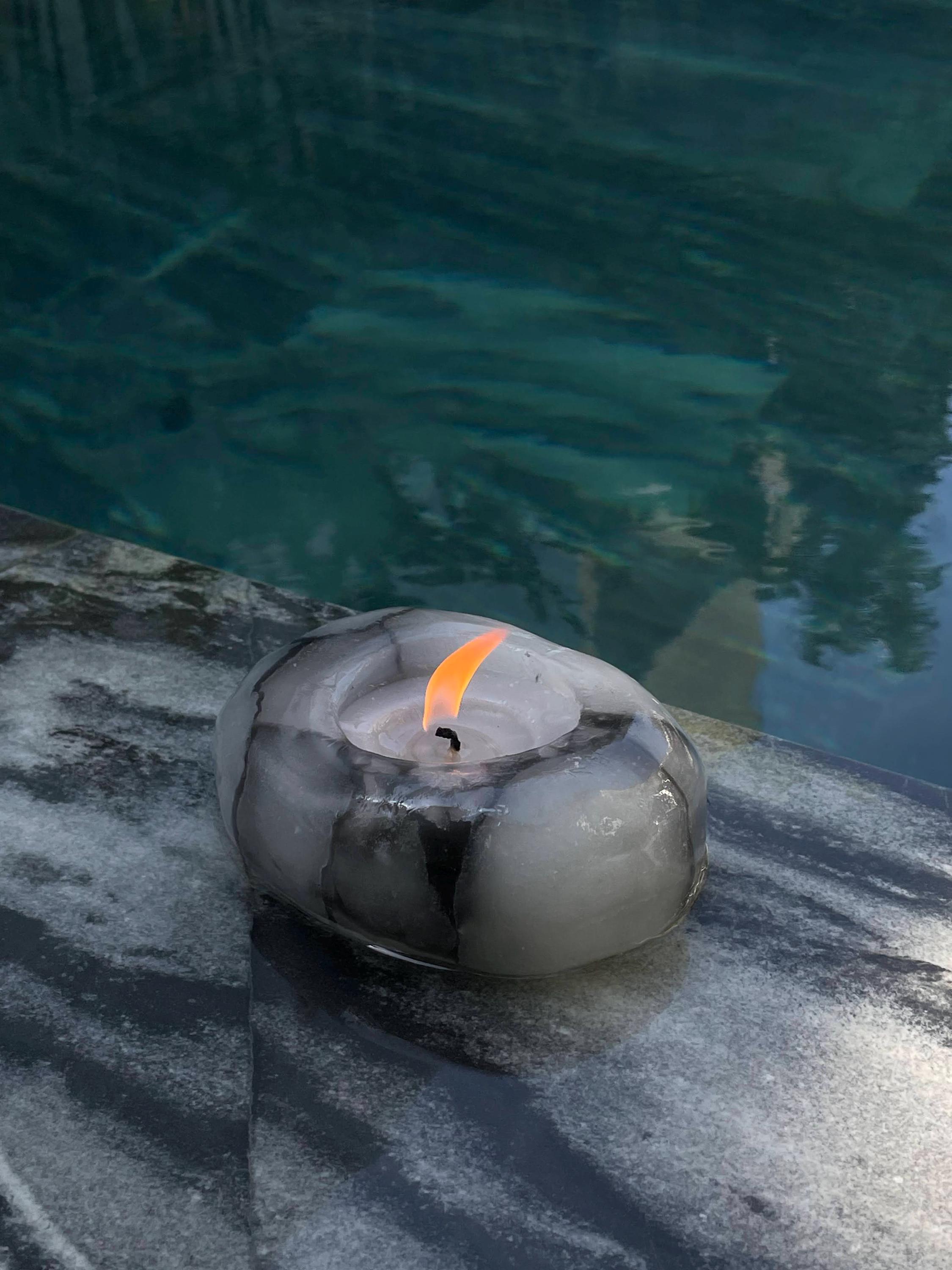
The Science of Candle Burning — Why Some Candles Perform Better Than Others
A candle's performance comes down to three variables: wick size, wax composition, and candle geometry. When these are matched correctly, the candle burns evenly, produces a stable flame, and consumes all its wax without tunneling or excessive soot. When they are mismatched — which happens often in cheap or poorly designed candles — you get uneven burn pools, wasted wax, and a frustrating experience. Understanding the basic science of how candles work helps you choose better candles, use them more effectively, and appreciate why a well-made candle performs so differently from a mass-produced one.
How a Candle Actually Works
A candle is a simple heat engine. Here is what happens when you light one: The flame melts the wax around the wick, creating a pool of liquid wax. The liquid wax is drawn up the wick by capillary action — the same principle that makes a paper towel soak up water. As the liquid wax reaches the top of the wick, it vaporizes in the heat of the flame. The wax vapor mixes with oxygen in the air and combusts, producing light, heat, carbon dioxide, and water vapor. The flame is not burning the wick — it is burning wax vapor. The wick is just a delivery system. This is why a good wick is so critical: it controls the rate at which liquid wax is drawn up and vaporized, which determines the size and behavior of the flame. The entire system is self-regulating. The flame melts wax, which feeds the flame, which melts more wax. If the wick is the right size for the candle, this cycle reaches a stable equilibrium — a steady flame that consumes wax at a consistent rate. If the wick is wrong, the system goes out of balance.
The Wick — The Most Important Component
Most people think the wax is the most important part of a candle. It is not. The wick is. A wick that is too large for the candle's diameter will draw up too much liquid wax, creating an oversized flame. This flame burns too hot, produces soot (unburned carbon particles), consumes wax too quickly, and can cause the wax to overflow the melt pool and run down the sides. A wick that is too small will not generate enough heat to melt the wax all the way to the edges. The candle will tunnel — burning straight down through the center while leaving thick walls of unmelted wax around the sides. Eventually, the wick may drown in a pool of liquid wax and extinguish itself. Getting the wick size right is the most important technical decision in candle making. It requires testing — burning multiple prototypes with different wick sizes to find the one that produces a melt pool that reaches the edges without overheating. Reinforced wicks are an important innovation. Standard cotton wicks can become soft and bend over during burning, especially in wide candles with large melt pools. When a wick bends, it changes the flame position and can cause uneven burning. Reinforced wicks contain a thin supporting core that keeps the wick upright and stable throughout the entire burn. SHAKHOV stone candles use reinforced wicks specifically because of the candles' wide, flat geometry. The reinforcement keeps the wick standing straight in the melt pool right until the very end of the candle's life — it does not sink or collapse into the wax the way standard wicks can. This means you get a consistent flame from the first burn to the last.
Wax Composition — What You Are Actually Burning
Different waxes have different melting points, hardness levels, and combustion characteristics. These properties directly affect how a candle performs. Melting point determines how quickly the wax liquefies around the flame. Low-melting-point waxes (like soy) form melt pools quickly but are too soft for freestanding candles. High-melting-point waxes (like some paraffin blends) take longer to melt but hold their shape without a container. Hardness affects the candle's structural integrity. Softer waxes need containers. Harder waxes can stand on their own. SHAKHOV uses a blend of food-grade paraffin P2 and natural waxes that is hard enough to hold a stone-like shape without any container, while still melting at a temperature that produces a good melt pool. Crystal structure influences surface appearance. Palm wax, for example, creates a distinctive crystalline pattern on the candle surface — a feathered, frosted texture that looks natural and organic. This is why palm wax is used in blends where visual appearance matters. Combustion cleanliness varies by wax type. All waxes produce carbon dioxide and water vapor when burned properly. Soot (visible black particles) is primarily a function of wick sizing and airflow, not wax type — any wax will produce soot if the wick is too long or the candle is in a draft.
Candle Geometry — Shape Determines Behavior
The shape of a candle is not just aesthetic — it directly affects how the candle burns. Diameter-to-height ratio is the key variable. A wide, flat candle (like a stone candle) creates a broad, shallow melt pool. This is desirable because it means the flame can reach all the wax without tunneling, and the candle burns down evenly. A tall, narrow candle creates a deep, narrow melt pool that is prone to tunneling. Surface area affects heat distribution. A wide candle radiates heat over a larger area, which helps melt wax to the edges. A narrow candle concentrates heat in a small area, which can cause the center to overheat while the edges remain solid. Mass and thermal inertia play a role in how the candle responds to changes. A large, heavy stone candle heats up slowly and cools down slowly — it has high thermal inertia. This makes it more stable and predictable than a small, light candle that heats and cools quickly. Stone candles are designed with all of this in mind. Their wide, low profile creates the ideal geometry for even burning. The flat shape maximizes the surface area of the melt pool relative to the candle's volume, which means more complete wax consumption and longer effective burn time.
What Causes Tunneling?
Tunneling is the most common candle problem, and it is almost always caused by one of two things: Insufficient first burn. If the candle is extinguished before the melt pool reaches the edges on its first burn, the wax develops a "memory ring." On subsequent burns, the melt pool only extends to where it reached the first time, creating a tunnel. The fix: always burn long enough for the full surface to melt on the first use. Wick too small. If the wick does not generate enough heat to melt wax to the edges — even given enough time — the candle is fundamentally mis-wicked. This is a manufacturing defect and cannot be fixed by the user. Well-made candles are tested to ensure the wick is sized correctly for the candle's diameter. SHAKHOV stone candles are tested with multiple wick sizes during development to find the right match for each candle size. The wide, flat geometry naturally resists tunneling because the melt pool does not need to extend far from the wick to reach the edges.
What Causes Soot?
Soot — the black carbon deposits that appear on walls, ceilings, and surfaces near a burning candle — has three main causes: Untrimmed wick. A wick longer than 5mm produces a flame that is too large. The large flame cannot fully combust all the wax vapor it generates, and the excess carbon is released as soot. Solution: trim the wick to 3-5mm before every burn. Drafts. A candle in a draft (near a window, fan, air conditioning vent, or doorway) flickers constantly. Each flicker disrupts the combustion process, causing incomplete burning and soot production. Solution: move the candle to a draft-free location. Burning too long. After 3-4 hours of continuous burning, the melt pool becomes very deep and the wick can develop a carbon "mushroom" at the tip. This mushroom causes an oversized, sooty flame. Solution: limit burn sessions to 3-4 hours and trim the wick before relighting. Soot is not a function of wax type. Any wax — paraffin, soy, palm, beeswax — will produce soot under these conditions. The "soy candles don't soot" claim is a marketing myth; soy candles soot just as much as paraffin when the wick is untrimmed or the candle is in a draft.
Why Do Some Candles Drip?
Dripping happens when the rate of wax melting exceeds the rate of wax consumption by the flame. The excess liquid wax overflows the melt pool and runs down the sides. Common causes include oversized wicks (too much heat, too much melting), drafts (uneven heat distribution pushes liquid wax to one side), and tilted candles (gravity pulls the melt pool to the low side). Stone candles are sealed with three layers of protective lacquer that prevent wax from seeping through the surface. However, if the lacquer is scratched or damaged, wax can leak through at that point. This is why we always recommend using a candle holder or tray underneath — SHAKHOV sells dedicated candle trays designed for this purpose. No candle, regardless of construction, should be guaranteed never to drip.
Burn Time — What Determines How Long a Candle Lasts?
Burn time is a function of the total amount of wax and the rate at which the flame consumes it. More wax = longer burn time. This is straightforward. A larger candle contains more fuel and burns longer. SHAKHOV stone candles range from about 8 hours (S-size) to 55 hours (XL-size). Wick size affects consumption rate. A larger wick burns wax faster, producing more light and heat but shortening the total burn time. A smaller wick conserves wax but produces less light. The ideal wick is the smallest one that still creates a full melt pool. Wax type matters. Higher-melting-point waxes burn more slowly, producing longer burn times per gram. The food-grade paraffin P2 and natural wax blend used in SHAKHOV candles is formulated for a balance between burn time and flame quality. Candle care affects burn time. A properly trimmed wick, a full first burn, and sessions of 1-4 hours maximize total burn time. An untrimmed wick in a drafty room burns wax roughly 30-40% faster than optimal conditions.
The Role of the Protective Lacquer
SHAKHOV stone candles are coated with three layers of protective lacquer. This lacquer serves one primary purpose: sealing the wax surface to prevent the candle from leaking. Without lacquer, the wax-paraffin blend could slowly seep through micro-pores in the surface, especially in warmer environments. The lacquer creates a sealed barrier that contains the wax inside the candle's form. This is also why the lacquer must not be mechanically damaged. A scratch, chip, or gouge in the lacquer coating creates an opening through which liquid wax can escape during burning. If the lacquer is damaged, the candle may leak at that point — which is another reason we recommend always using a candle holder or tray. For floating use on water, the lacquer is not necessary — water itself prevents wax from spreading. You can remove the lacquer for a more natural matte appearance when using stone candles as floating candles.
Why Well-Made Candles Cost More
The science of candle burning explains why quality matters and why it costs more. A well-made candle requires wick testing for every candle size. It requires quality wax with consistent melting properties from batch to batch. It requires proper curing time — 24-48 hours minimum — for the wax to crystallize fully. And it requires inspection of every candle to ensure the wick is centered, the surface is correct, and the lacquer is intact. Mass-produced candles skip or shortcut most of these steps. The result is candles that tunnel, soot, drip, and burn unevenly — not because of the wax type, but because the engineering was never done properly. When you buy a well-made candle, you are paying for the science and the craft that makes it work the way it should. SHAKHOV stone candles — food-grade paraffin P2 and natural wax blend, reinforced wicks, three-layer lacquer seal. Hand-shaped in Kaş, Turkey. shakhov.store