
What Makes a Candle "Handmade"? Mass Production vs. Craft
A handmade candle is shaped, poured, and finished by a person — not stamped out by a machine using silicone molds on an assembly line. The difference is visible: slight variations in shape, texture, and surface that make each piece unique. Handmade candles cost more because they take 10-30 times longer to produce per unit than factory candles, and each one passes through human hands multiple times. But the word "handmade" is used loosely in the candle industry. A candle poured into a silicone mold by a person in a home kitchen is technically handmade. So is a candle sculpted entirely by hand without any mold at all. These are very different levels of craft, yet both carry the same label. This article explains what "handmade" actually means in candle making, how factory production differs from artisan work, why handmade candles cost more, and how to tell the difference.
The Spectrum of Candle Production
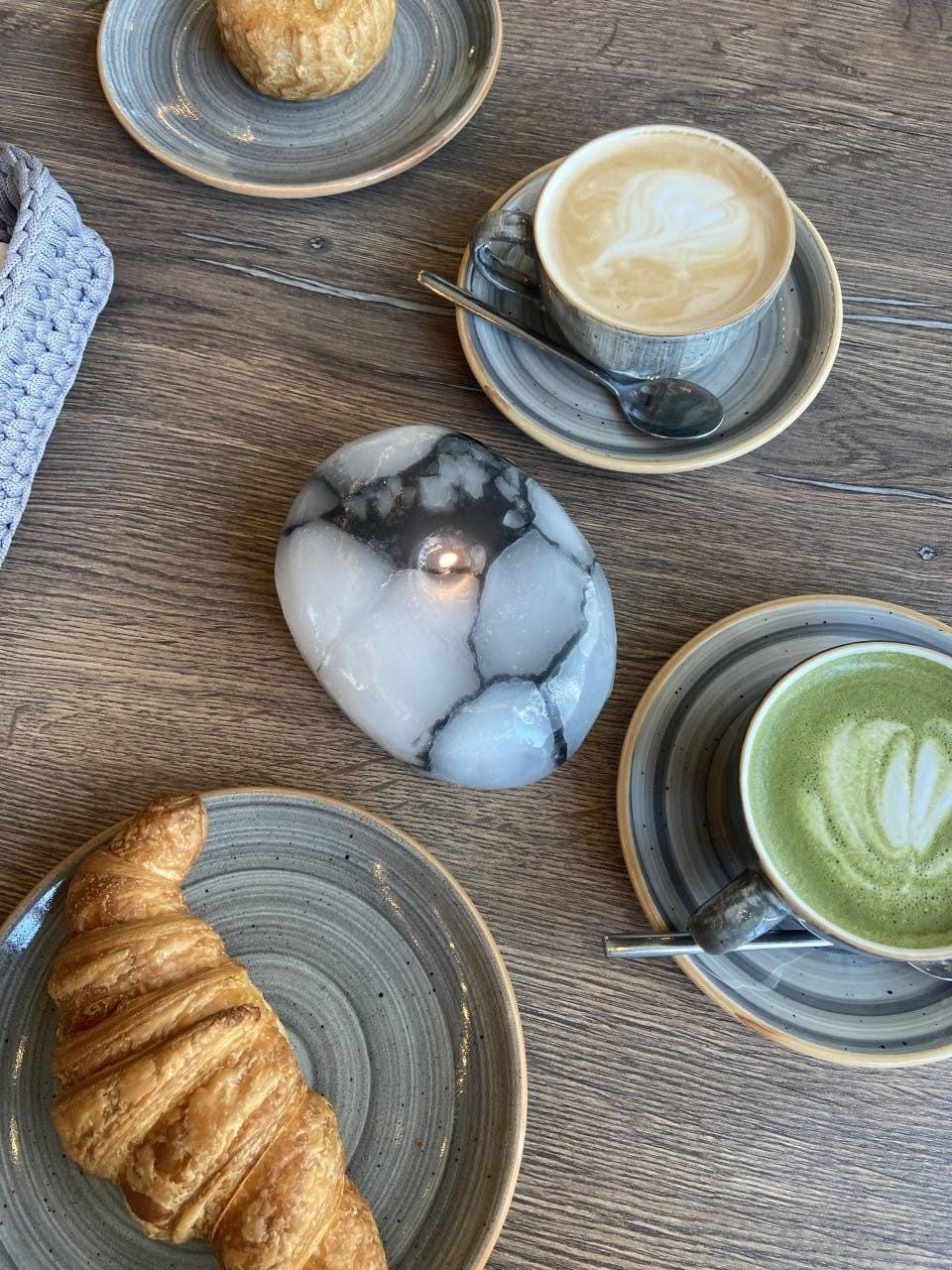
Candle production exists on a spectrum from fully automated to fully manual. Understanding where a candle falls on this spectrum tells you more than the word "handmade" alone. Fully automated (factory). Machines melt the wax, pour it into molds, set the wicks, cool the candles, and package them. A single factory line can produce thousands of identical candles per hour. Human involvement is limited to machine operation and quality control. This is how the vast majority of candles sold in big-box stores and supermarkets are made. Semi-automated (small factory). A person melts and mixes the wax, pours it into molds, and handles finishing and packaging. The mold still determines the shape — every candle from the same mold is identical. This is common in small candle businesses and Etsy shops. Often labeled "handmade" or "hand-poured." Hand-poured. The candle maker manually pours liquid wax into a container or mold. The pouring is done by hand, but the shape comes from the container or mold. This is the most common meaning of "handmade" in the candle market. It requires skill (pour temperature, fragrance timing, wick centering) but the shape is predetermined. Hand-shaped (no molds). The candle maker forms the candle entirely by hand from warm, pliable wax — like a potter with clay. There is no mold, no template, no predetermined shape. Every candle is a unique sculpture. This is the rarest and most labor-intensive form of candle making. SHAKHOV stone candles fall into the last category. Each candle is hand-shaped from warm wax without any mold. The maker's hands are the only tool that determines the shape.
Factory Candles vs. Artisan Candles — The Process Compared
A factory candle goes from raw wax to finished product in minutes. Wax is melted in industrial vats, fragrance and dye are added by formula, the mixture is pumped into rows of identical molds, pre-tabbed wicks are inserted by machine, the candles cool on a conveyor, and they are ejected from molds and packaged automatically. The entire process is optimized for speed and consistency. The goal is to make every candle identical to every other candle. An artisan candle takes hours. The maker selects and blends wax by feel and experience. The wax is heated to the right temperature — not by a sensor, but by the maker's judgment. The candle is shaped or poured with attention to each individual piece. The wick is set by hand, centered by eye. The surface is inspected and refined. The candle cures for a day or two before the maker decides it meets their standard. The difference is not just romantic — it is structural. Factory candles are optimized for uniformity. Artisan candles are optimized for quality of each individual piece.
Why Handmade Candles Cost More
The price difference between a factory candle and a handmade candle is not arbitrary — it reflects real differences in time, materials, and skill. Time. A factory produces hundreds or thousands of candles per hour. A hand-shaped stone candle takes 4-6 hours to make. This difference alone accounts for most of the price gap. When you buy a handmade candle, you are paying for hours of a skilled person's focused work. Waste rate. Factory molds produce consistent results with minimal waste. Hand-shaping means some candles don't meet the maker's standards and are melted down and reshaped. This waste is built into the cost. Materials. Artisan candle makers often use higher-quality wax blends, cotton wicks, and more expensive finishing materials than factories that optimize for cost. The difference is subtle but affects burn quality. Skill. Hand-shaping wax into a convincing stone form — without molds, without templates — is a learned skill that takes years to develop. You are paying for expertise, not just labor. Scale. Factory candles benefit from economies of scale: bulk wax purchasing, automated processes, cheap labor markets. A one-person workshop in Kaş, Turkey, has none of these advantages. The price reflects the real cost of making things by hand, one at a time.
How to Identify a Genuinely Handmade Candle
Not everything labeled "handmade" is equally crafted. Here are signs that a candle is genuinely made by hand: Variation between pieces. If every candle in a line looks exactly the same — same shape, same weight, same surface texture — it came from a mold. Genuinely handmade candles show subtle differences between pieces, even within the same product line. Pick up two stone candles from the same collection and you will see: similar, but not identical. Organic shapes. Look closely at the form. Machine-made candles have perfectly symmetrical, uniform shapes. Hand-shaped candles have organic curves, subtle asymmetry, and surface textures that could only come from manual shaping — but the finish is clean and polished, not rough or marked. Small batch production. A maker producing genuinely handmade candles cannot produce thousands per month. If a "handmade" brand has unlimited stock and instant shipping on every product, it is likely mold-based or factory-assisted. The maker is visible. Genuinely handmade brands usually have a maker behind them — a person whose story, workshop, and process are part of the brand. If the brand has no maker, no workshop photos, and no production story, it may be reselling factory products with a handmade label. Price. If a "handmade" candle costs the same as a factory candle from a big-box store, something does not add up. Genuine handcraft cannot compete on price with automated production — and it should not try to.
The SHAKHOV Process — Hand-Shaping Without Molds
SHAKHOV stone candles represent one of the most labor-intensive approaches to candle making. Here is what "handmade" means in this specific context: No silicone molds are used at any stage. The maker takes warm, pliable wax-paraffin blend and shapes it by hand into an organic stone form — pressing, smoothing, rotating, and refining until the candle looks and feels like a natural river stone. This process cannot be rushed, automated, or standardized. The maker's hands, experience, and aesthetic judgment are the only tools. After shaping, the surface is finished to the desired texture — smooth like polished marble or rough like river rock. The wick is set and centered by hand. Three layers of protective lacquer are applied to seal the surface and prevent wax from leaking through. The candle cures for 24-48 hours before final inspection. This process takes 4-6 hours per candle. SHAKHOV can produce up to 1,000 candles per month, but each one still passes through human hands at every stage — that is the principle of Human to Human. Scale does not replace craft.
Does "Handmade" Mean Better Quality?
Not automatically — but it often does, for reasons that go beyond romance. A hand-shaped candle is inspected by its maker at every stage. The maker sees and feels every flaw, every imperfection, every variation. A factory worker monitoring a conveyor belt cannot provide this level of attention — they are watching hundreds of candles pass by, not holding each one. Handmade production also allows for immediate adjustment. If a batch of wax behaves differently (which happens — natural materials vary), the maker adjusts technique in real time. A factory relies on preset parameters that may not account for batch variations. The result is not perfection — it is character. Each handmade candle is slightly different, and that difference is evidence of human attention and care. SHAKHOV — handmade stone candles from Kaş, Turkey. Shaped by hand, without molds. Human to Human. shakhov.store