
Paraffin vs. Soy vs. Palm Wax — Which Candle Wax Is Best?
No single candle wax is objectively "best." Each type — paraffin, soy, palm, beeswax, coconut — has specific strengths and weaknesses. Paraffin offers the longest burn time and strongest scent throw. Soy is plant-based but prone to frosting and weaker performance. Palm wax creates beautiful crystalline surface patterns. Beeswax burns the cleanest but costs the most. Coconut wax blends well but rarely stands alone. The real answer is that how a candle is made matters more than what wax it uses. A well-crafted paraffin candle will outperform a poorly made soy candle every time — and vice versa. Wick sizing, pour temperature, curing time, and candle geometry have as much impact on performance as wax chemistry. This guide compares the major candle wax types honestly — no marketing spin, no villain narratives — so you can make informed choices about the candles you buy and burn.
Paraffin Wax
Paraffin is the most widely used candle wax in the world and has been for over a century. It is a byproduct of petroleum refining — specifically, it comes from the slack wax fraction of crude oil distillation. Strengths: Paraffin has the strongest scent throw of any candle wax, both cold (unlit) and hot (burning). This is why the vast majority of scented candles use paraffin — it holds and releases fragrance oils better than any alternative. It also has excellent structural rigidity, which allows candle makers to create freestanding shapes without containers. Burn time per gram of wax is among the highest of any wax type. Paraffin is also the most affordable candle wax. Weaknesses: Paraffin is petroleum-derived, which concerns buyers focused on sustainability and natural sourcing. It can produce more soot than plant-based waxes if the wick is not properly sized or trimmed. The "petroleum product" label carries negative connotations in marketing, even though refined paraffin is chemically inert and non-toxic when burned. The safety question: Is paraffin wax safe? This is the most common question about paraffin, and the answer from toxicology research is yes — properly refined paraffin wax is non-toxic. Studies have shown that the emissions from burning a paraffin candle are well below any levels that would pose health risks under normal household use. The "paraffin is toxic" narrative originates primarily from marketing by competing wax types, not from scientific evidence. That said, any candle — regardless of wax type — will produce soot and potentially harmful compounds if burned improperly (untrimmed wick, burning in a draft, burning for too long). Proper candle care matters more than wax type for indoor air quality.
Soy Wax
Soy wax is made from hydrogenated soybean oil. It became popular in the early 2000s as a "natural" alternative to paraffin and is now the second most common candle wax. Strengths: Soy is plant-based, renewable, and biodegradable — strong selling points for environmentally conscious buyers. It burns at a lower temperature than paraffin, which means container candles last longer per gram (though this advantage disappears in freestanding candles). Soy also cleans up easily with soap and water, making container reuse simple. Weaknesses: Soy wax has a weaker scent throw than paraffin — both cold and hot. This is the main performance complaint from candle makers and buyers. It is also prone to "frosting" — a white, crystalline bloom on the surface that is harmless but cosmetically unattractive. Soy wax is softer than paraffin, which makes it poorly suited for freestanding candles — it needs a container to hold its shape. Pure soy candles can also have "wet spots" (areas where the wax pulls away from the glass) and uneven surfaces. The sustainability question: Soy sounds natural, but the picture is more complex. Most soy is grown as a monoculture crop, often involving deforestation (particularly in South America), heavy pesticide use, and genetic modification. The hydrogenation process used to turn soy oil into wax requires chemical processing. "Soy wax" is not simply soybeans — it is an industrially processed product. This does not make soy wax bad — it makes the "natural vs. synthetic" distinction less clear-cut than marketing suggests.
Palm Wax
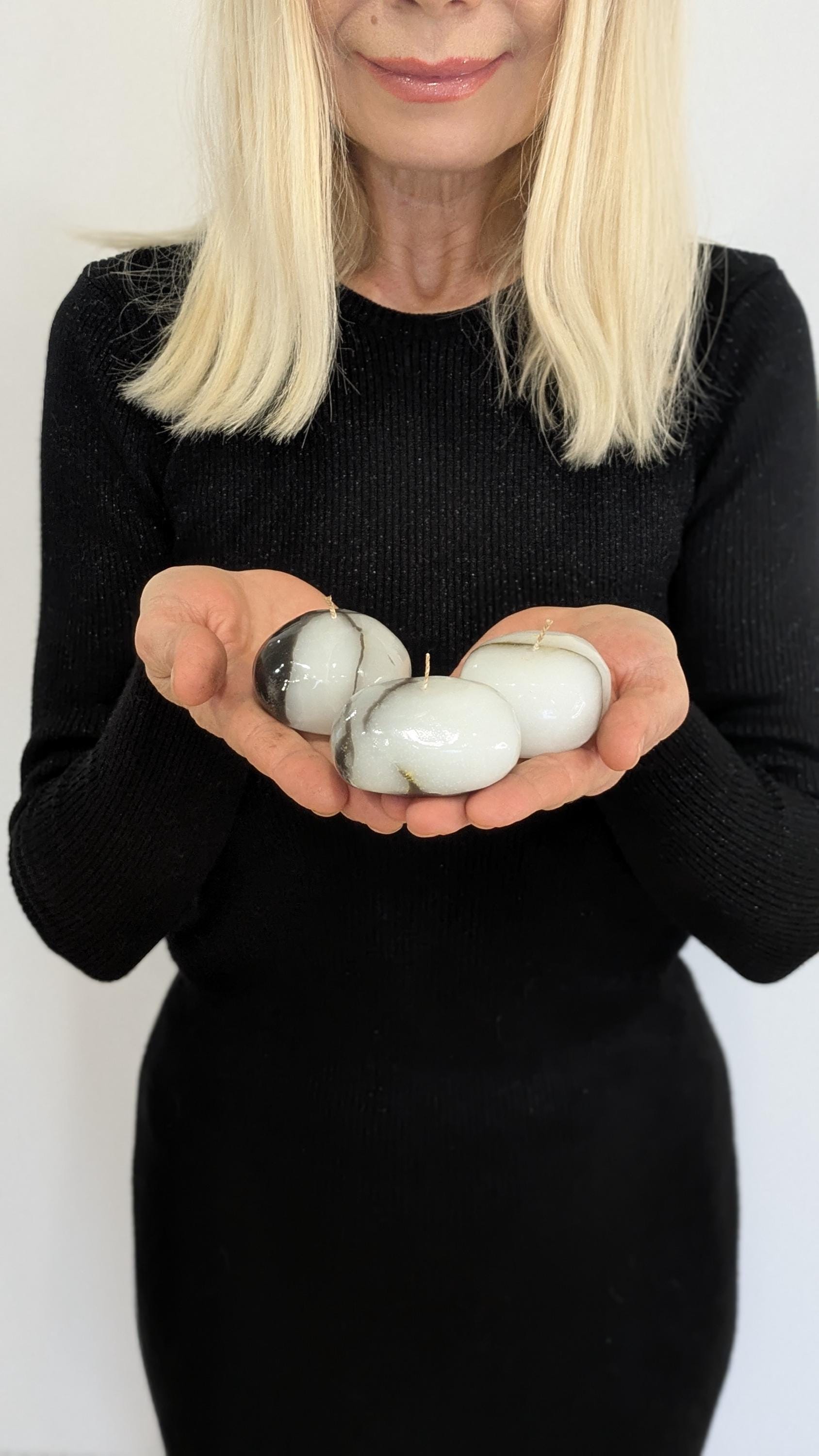
Palm wax is derived from palm oil through a crystallization process. It is the least common of the three major candle waxes but has distinctive aesthetic properties. Strengths: Palm wax produces a unique crystalline pattern on the candle surface — a natural, feathered texture that looks like frost on glass or the grain of polished stone. This visual effect is the primary reason candle makers choose palm wax. It is harder than soy, making it suitable for freestanding candles. It burns cleanly with minimal soot and has moderate scent throw — better than soy, slightly less than paraffin. Weaknesses: Palm oil production has been linked to deforestation, habitat destruction, and labor issues — primarily in Southeast Asia. This makes sourcing critical. Certified sustainable palm wax (RSPO certified) exists but represents a small fraction of global palm oil production. Palm wax is also more expensive than paraffin and less available than soy. Why SHAKHOV uses a paraffin-palm blend: SHAKHOV stone candles are made from a blend of paraffin and palm wax. The paraffin provides structural strength and long burn time — essential for a freestanding candle that must hold a stone-like shape without a container. The palm wax contributes the crystalline surface texture that gives each candle its distinctive natural look, and adds rigidity to the overall structure. The blend is optimized for performance, aesthetics, and durability — not for marketing claims.
Beeswax
Beeswax is a natural wax produced by honeybees. It is the oldest candle-making material, predating both paraffin and plant-based waxes by centuries. Strengths: Beeswax burns the cleanest of any wax type — virtually no soot with a properly sized wick. It has a natural, subtle honey scent without added fragrance. It burns slowly, providing excellent burn time per gram. And it has a warm, golden color that many people find beautiful. Weaknesses: Beeswax is expensive — typically 3-5x the cost of paraffin. This makes it impractical for large candles or commercial production at accessible price points. Scent throw is low — beeswax does not hold added fragrance oils well, so most beeswax candles are unscented or lightly scented. Supply is limited and variable, dependent on bee populations and honey production.
Coconut Wax
Coconut wax is a newer entrant to the candle market, made from hydrogenated coconut oil. Strengths: Good scent throw — better than soy, comparable to paraffin for some fragrances. Smooth, creamy appearance. Slow, even burn. Works well in container candles. Weaknesses: Coconut wax is very soft — too soft for freestanding candles without blending. It is expensive. And like soy, its "natural" credentials depend on sourcing practices — coconut farming has its own environmental and labor considerations. In practice, coconut wax is almost never used alone. It is usually blended with soy, paraffin, or beeswax to improve performance.
Wax Blends — Why Most Good Candles Use Them
The candle industry's best-kept secret is that most high-quality candles use wax blends, not single-origin waxes. Blending allows candle makers to combine the strengths of different waxes while minimizing their weaknesses. Common blends include paraffin-soy (combines scent throw with plant-based marketing), paraffin-palm (structural strength with crystalline aesthetics), soy-coconut (improved scent throw with plant-based credentials), and paraffin-beeswax (clean burn with strong performance). A candle labeled "soy candle" often contains 51% soy and 49% paraffin — technically soy, practically a blend. Labeling regulations vary by country, and "soy candle" does not always mean 100% soy wax.
What Actually Determines Candle Quality?
If wax type is not the defining factor, what is? Five things matter more: Wick sizing. A wick that is too large for the candle's diameter will burn too hot, produce soot, and consume wax too quickly. A wick that is too small will tunnel. Getting the wick right for a specific candle size and wax blend is the most important technical decision in candle making. Pour temperature. The temperature at which liquid wax is poured (or, in the case of stone candles, shaped) affects crystal structure, surface finish, and adhesion. Too hot — surface defects. Too cold — poor adhesion and weak structure. Curing time. Candles need to cure (rest after pouring or shaping) for 24-48 hours minimum. During curing, the wax crystallizes fully and the fragrance oils bind to the wax matrix. A candle burned before proper curing will underperform. Candle geometry. The ratio of diameter to height determines burn behavior. Wide, flat candles (like stone candles) create broad melt pools and burn evenly. Tall, narrow candles are more prone to tunneling and dripping. Craftsmanship. A candle maker who understands their materials — who tests wick sizes, adjusts for wax batch variations, inspects every candle — will produce better candles than a factory optimizing for speed and cost, regardless of wax type.
The Bottom Line
Choose candles based on how they perform and what you value — not based on wax type alone. A well-made paraffin candle is not inferior to a soy candle. A soy candle is not inherently "healthier" than paraffin. Palm wax is not automatically bad for the environment. The best candle is one that burns evenly, lasts a long time, looks beautiful, and is made by someone who cares about the craft. The wax is one ingredient in that equation — not the whole answer. SHAKHOV stone candles use a paraffin-palm wax blend, hand-shaped without molds. Browse the collection at shakhov.store.